
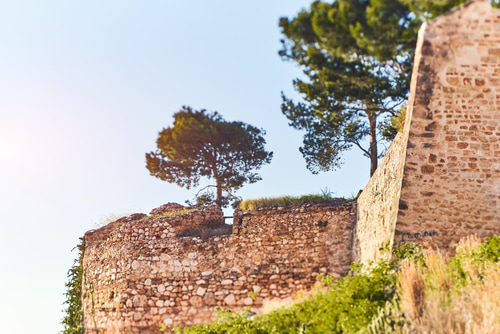
Menorca, one of the most emblematic islands of the Balearic archipelago, is famous for its impressive historical heritage. Its land holds numerous vestiges of ancient civilizations that inhabited the island. Among Menorca’s most outstanding archaeological treasures are the talayots and navetas, two types of megalithic structures that offer a fascinating insight into the lives of its first inhabitants. These prehistoric monuments are representative of the Talayotic culture that thrived on the island over 3,000 years ago. Below, together with IsasMenorca, we will tell you everything you need to know.
The Talayots: Monuments of Vigilance and Religion
Menorca’s talayots are prehistoric structures built with large stone blocks, dating from the Bronze Age and the Iron Age. These buildings, which can be circular or rectangular, had multiple functions, such as surveillance, religious practices, or residential purposes. A prominent example is the Talayot de Torelló, in Ciutadella, which stands out for its height and strategic location, suggesting a defensive use as a watchtower.
The talayots were not merely stone monuments; they were part of a complex social and organizational system. Although often associated with military purposes, they also played an important role in community life. These buildings could be meeting centers where important decisions for the community were made, or used to coordinate and send visual signals to each other in case of threat. The construction of the talayots required a large amount of resources and collective labor, reflecting the organizational capacity of the human groups that lived in Menorca in prehistory.
The Navetas: Collective Tombs of Prehistory
Another of Menorca’s great archaeological treasures are the navetas. These funerary structures, with a characteristic shape resembling an inverted boat, are unique to the Balearic Islands. Navetas were used as collective tombs where the dead were buried, accompanied by personal objects and offerings. The construction of these structures was one of the most complex expressions of the island’s megalithic architecture.
The Naveta d’Es Tudons, located on Menorca’s west coast, is the most famous example of this type of monument. This collective tomb dates from around 1000 BC and remains in excellent condition. Excavations at this site have revealed human bones, pottery, stone tools, and metal objects, providing valuable information about the funerary customs of the time. The naveta was not only a resting place for the dead but also a place laden with symbolism, reflecting the spiritual beliefs of Menorca’s inhabitants.
The Legacy of Talayots and Navetas in Modern Menorca
Menorca’s talayots and navetas are not only fascinating for their size and complexity but also represent a unique connection to the island’s past. These monuments offer a window into the lives of the Talayotic communities, who, thousands of years ago, built these structures to meet their religious, defensive, and social needs. Today, the ruins of these monuments remain a tourist and archaeological attraction, continuing to draw scholars and visitors eager to learn more about ancient Mediterranean civilizations.
Menorca’s talayots and navetas are two of the island’s greatest archaeological treasures. Their grandeur and mysterious function continue to captivate visitors. These megalithic monuments not only represent an architectural milestone but also provide us with a deep understanding of the beliefs, social organization, and daily life of Menorca’s prehistoric inhabitants. Their conservation and study remain fundamental to preserving the island’s historical heritage and ensuring that future generations can continue to admire these monuments that have stood the test of time. Without a doubt, Menorca’s talayots and navetas are an invaluable heritage that connects us to the most remote origins of this Mediterranean island.